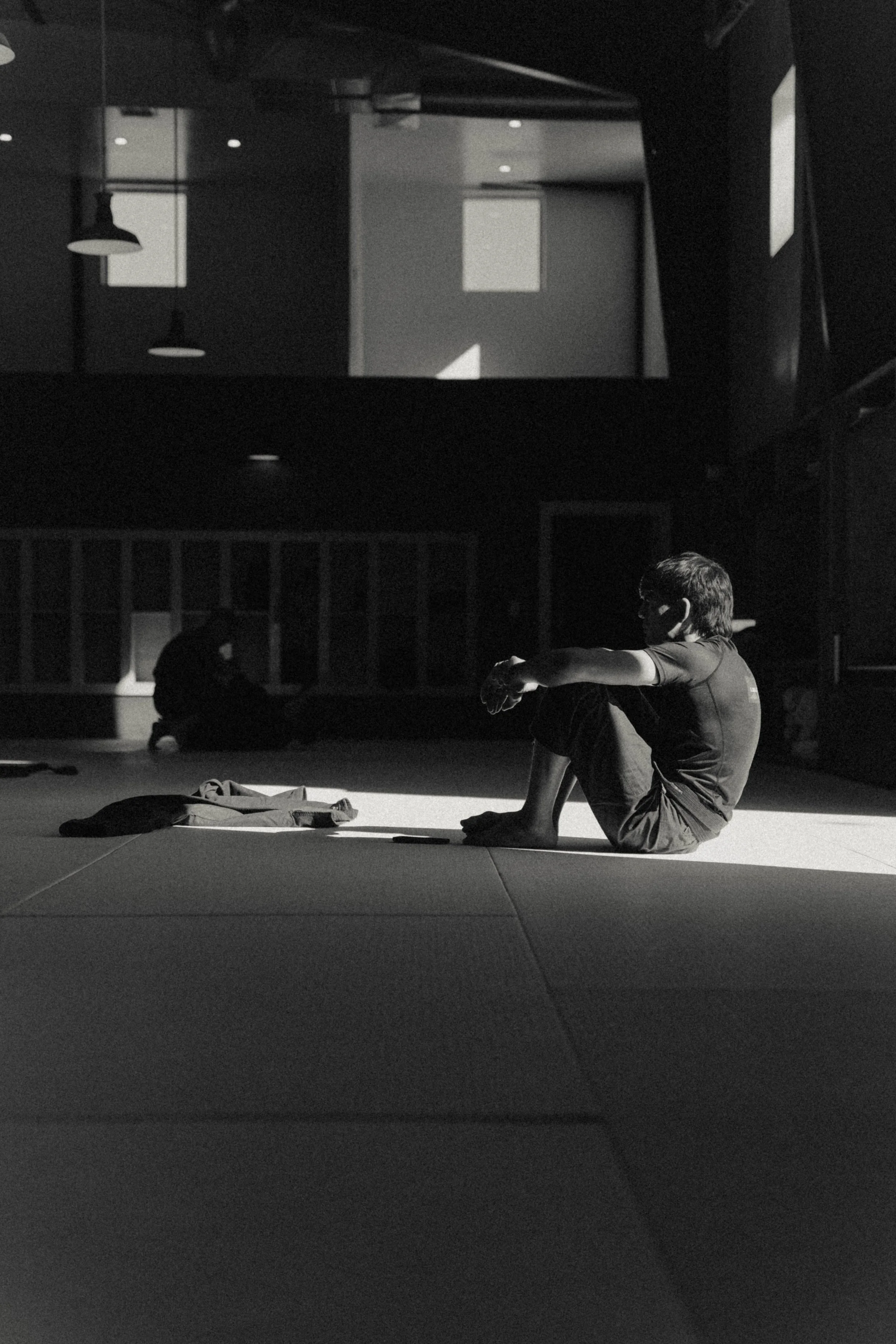
Two approaches to the same art. Here's how to decide where to start.
One of the first questions new Brazilian Jiu Jitsu students ask is whether they should train Gi or No-Gi.
Both are forms of Brazilian Jiu Jitsu, both involve grappling and submissions, and both develop skills that can improve your overall understanding of the art. But the differences in clothing, grips, pacing, and strategy can create distinct training experiences.
At Logos Jiu Jitsu, we teach both Gi and No-Gi at our Denver and Westminster academies because we believe each offers something valuable.
What Is Gi Jiu Jitsu?
Gi Jiu Jitsu is practiced wearing a traditional uniform consisting of a jacket, pants, and belt.
The uniform creates additional gripping opportunities. Practitioners can use their opponent's collar, sleeves, and pants to establish control, execute sweeps, pass guards, and apply submissions.
These grips introduce a technical dimension that rewards careful positioning, grip fighting, and strategic decision-making.
Gi training also includes techniques that depend on the uniform, such as collar chokes and certain lapel-based controls.
What Is No-Gi Jiu Jitsu?
No-Gi Jiu Jitsu is practiced without the traditional uniform. Athletes typically wear rashguards and grappling shorts.
Because practitioners cannot rely on gripping a jacket or pants, No-Gi emphasizes controlling the body through underhooks, overhooks, head positioning, wrist control, and other grappling connections.
Sweat and the absence of fabric grips can make some positions harder to maintain, often creating more frequent transitions.
No-Gi also shares many techniques and principles with wrestling and submission grappling.
The Main Differences Between Gi and No-Gi
Grips and Control
Gi practitioners can use fabric grips to establish and maintain positions. No-Gi practitioners rely primarily on controlling the opponent's body.
Pace and Movement
No-Gi can involve faster transitions because athletes have fewer ways to slow movement through clothing grips. Gi training can create opportunities for more prolonged grip exchanges and positional control.
Neither format is always faster or more technical; both demand timing, strategy, and precision.
Submissions
Both formats include common submissions such as armbars, triangles, and rear naked chokes.
Gi introduces additional submissions using the uniform, while No-Gi rulesets may place greater emphasis on certain leg attacks and submission systems.
Competition Rules
Tournament organizations may apply different rules to Gi and No-Gi divisions, particularly regarding grips, legal submissions, and uniform requirements.
Students interested in competing should become familiar with the rules of their chosen event.
Is Gi or No-Gi Better for Beginners?
Neither style is inherently better for every beginner.
Gi can help students develop patience, grip awareness, and detailed positional control. No-Gi can help students become comfortable with body positioning, movement, and controlling an opponent without clothing grips.
The best choice often comes down to your interests, schedule, and the style of training you enjoy.
At Logos, beginners can explore foundational techniques in both formats through our training programs.
Should You Train Both Gi and No-Gi?
Training both styles can help develop a more adaptable understanding of Brazilian Jiu Jitsu.
For example, learning guard retention in the Gi can strengthen your awareness of grips and frames, while practicing similar positions in No-Gi can encourage better body positioning and connection.
Although the formats have important differences, many fundamental principles transfer between them.
Students who enjoy both can build a training schedule that includes a combination of Gi and No-Gi classes.
What Should You Wear for Gi and No-Gi at Logos?
At Logos Jiu Jitsu, white, black, and blue Gis are permitted.
For standard training, students should wear a black rashguard underneath their Gi. No-Gi classes require black rashguards and black grappling shorts.
Logos-branded training gear may be worn in any color.
Visitors and new students should confirm any class-specific exceptions before attending.
Gi and No-Gi Classes in Denver and Westminster
Logos Jiu Jitsu offers Gi and No-Gi instruction for students of different experience levels.
Our Denver headquarters is led by Professor Michael Liera Jr., while Logos Westminster is led by Professor Elizabeth Liera.
Both academies emphasize purposeful training, technical understanding, and developing an individual approach to the art.
Whether you're interested in competing, learning self-defense skills, or simply becoming a more complete grappler, both styles offer opportunities to improve.
Find Your Style at Logos
There's no single correct way to practice Brazilian Jiu Jitsu.
Some students prefer the strategic grip exchanges of Gi training. Others enjoy the movement and pace of No-Gi. Many discover that training both helps them develop a deeper appreciation for the art.
Explore our Gi and No-Gi class schedules in Denver and Westminster, or schedule a free introductory class to begin training at Logos.