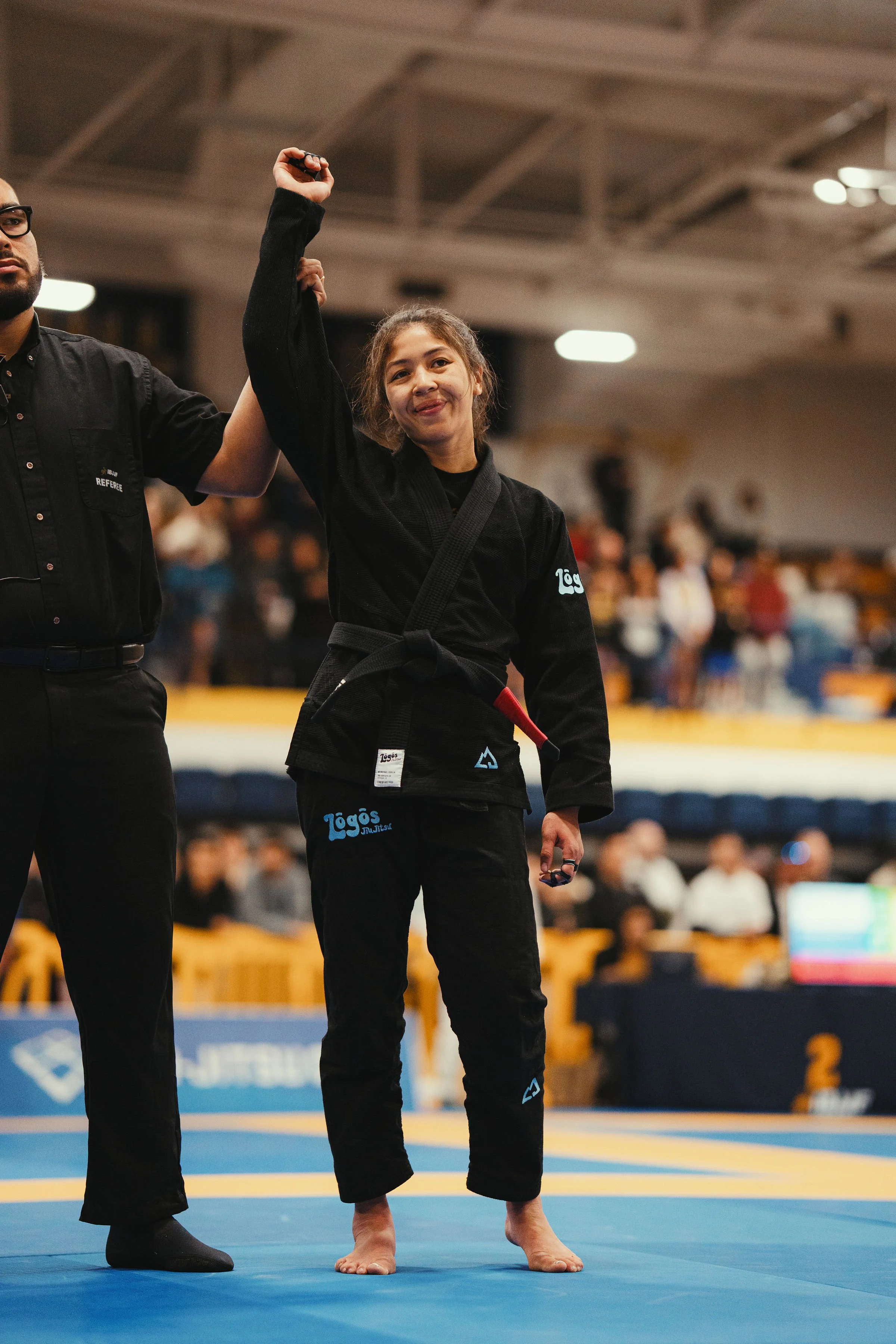
Everything you need to know before stepping onto the mats for the first time.
Starting Brazilian Jiu Jitsu can feel intimidating, especially if you've never practiced a martial art before. The terminology is unfamiliar, the movements are different from most sports, and the idea of grappling with another person might seem overwhelming.
But everyone starts somewhere.
At Logos Jiu Jitsu, we believe that great Jiu Jitsu begins with good people. Whether you're interested in self-defense, physical fitness, competition, or simply trying something new, Brazilian Jiu Jitsu offers an opportunity to challenge yourself and become part of a community built around learning.
Here's what you should know before your first class.
What Is Brazilian Jiu Jitsu?
Brazilian Jiu Jitsu, commonly known as BJJ, is a grappling-based martial art that emphasizes leverage, positioning, control, and submissions.
Unlike martial arts that focus primarily on punches and kicks, Brazilian Jiu Jitsu teaches practitioners how to control an opponent through techniques such as guard retention, sweeps, escapes, positional transitions, and submission holds.
One of the defining characteristics of BJJ is its emphasis on technique and problem-solving rather than relying exclusively on strength or athleticism.
For beginners, learning Jiu Jitsu is as much a mental challenge as it is a physical one.
Do You Need Experience to Start BJJ?
No. You don't need previous martial arts experience, exceptional flexibility, or a particular fitness level to begin Brazilian Jiu Jitsu.
In fact, many people start with no grappling experience at all.
Beginner-friendly classes introduce foundational movements and concepts gradually, helping students understand how their bodies move and how techniques work against resistance.
At Logos Jiu Jitsu, our Fundamentals programs are designed to help students develop a technical foundation while becoming comfortable with the training environment.
What Happens During Your First Jiu Jitsu Class?
Although individual classes vary, a typical Brazilian Jiu Jitsu session includes several components.
Warm-Up and Movement
Classes may begin with movements that develop mobility, coordination, and body awareness. These exercises help prepare students for the positions they'll encounter during training.
Technical Instruction
An instructor introduces a technique or positional concept, explaining how it works and when to use it.
Partner Drilling
Students practice techniques with a training partner, repeating movements to develop familiarity, timing, and control.
Positional Training or Sparring
Depending on the class, students may participate in controlled positional exercises or live grappling. Beginners should communicate their experience level and follow instructor guidance.
You aren't expected to understand everything immediately. Learning Jiu Jitsu is a process that develops over time.
What Should You Wear to Your First BJJ Class?
Brazilian Jiu Jitsu is practiced in two primary formats: Gi and No-Gi.
For Gi training, students wear a traditional Jiu Jitsu uniform consisting of a jacket, pants, and belt.
For No-Gi training, practitioners wear fitted athletic clothing such as rashguards and grappling shorts.
At Logos, permitted Gi colors are white, black, and blue. Standard No-Gi training requires black rashguards and black shorts, while Logos-branded gear may be worn in any color.
Before attending your first class, contact your chosen academy to confirm the appropriate clothing and any available introductory uniform options.
How Often Should Beginners Train Jiu Jitsu?
For most beginners, two to three classes per week is a sustainable starting point.
This provides enough repetition to begin understanding fundamental movements while allowing time for physical recovery.
As your conditioning and experience improve, you can gradually increase your training frequency.
More important than training every day is establishing a schedule you can maintain consistently.
Is Brazilian Jiu Jitsu Good for Fitness and Self-Defense?
Brazilian Jiu Jitsu develops several physical qualities, including muscular endurance, coordination, mobility, and cardiovascular conditioning.
It also teaches skills that can be useful in self-defense, including controlling distance, escaping disadvantageous positions, and managing physical resistance.
Beyond physical development, many students appreciate the problem-solving, discipline, and social connections that come from regular training.
No martial art guarantees safety in every confrontation, but BJJ can provide valuable grappling knowledge and confidence.
Finding a Brazilian Jiu Jitsu Academy in Denver
When choosing a BJJ academy, consider more than proximity or class schedules.
Look for experienced instructors, structured beginner instruction, a clean training environment, and a culture where students treat one another with respect.
At Logos Jiu Jitsu, siblings Michael Liera Jr. and Elizabeth Liera lead our Denver and Westminster academies with a shared philosophy of technical development, individuality, and community.
Our goal is to create an environment where students can pursue high-level Jiu Jitsu while developing their own relationship with the art.
Start Brazilian Jiu Jitsu at Logos
Whether you're completely new to martial arts or returning after time away, your first step is simply showing up.
Logos Jiu Jitsu offers beginner-friendly Brazilian Jiu Jitsu training in Denver and Westminster, Colorado.
Ready to begin? Explore our class schedules and schedule your free introductory class at Logos Jiu Jitsu.