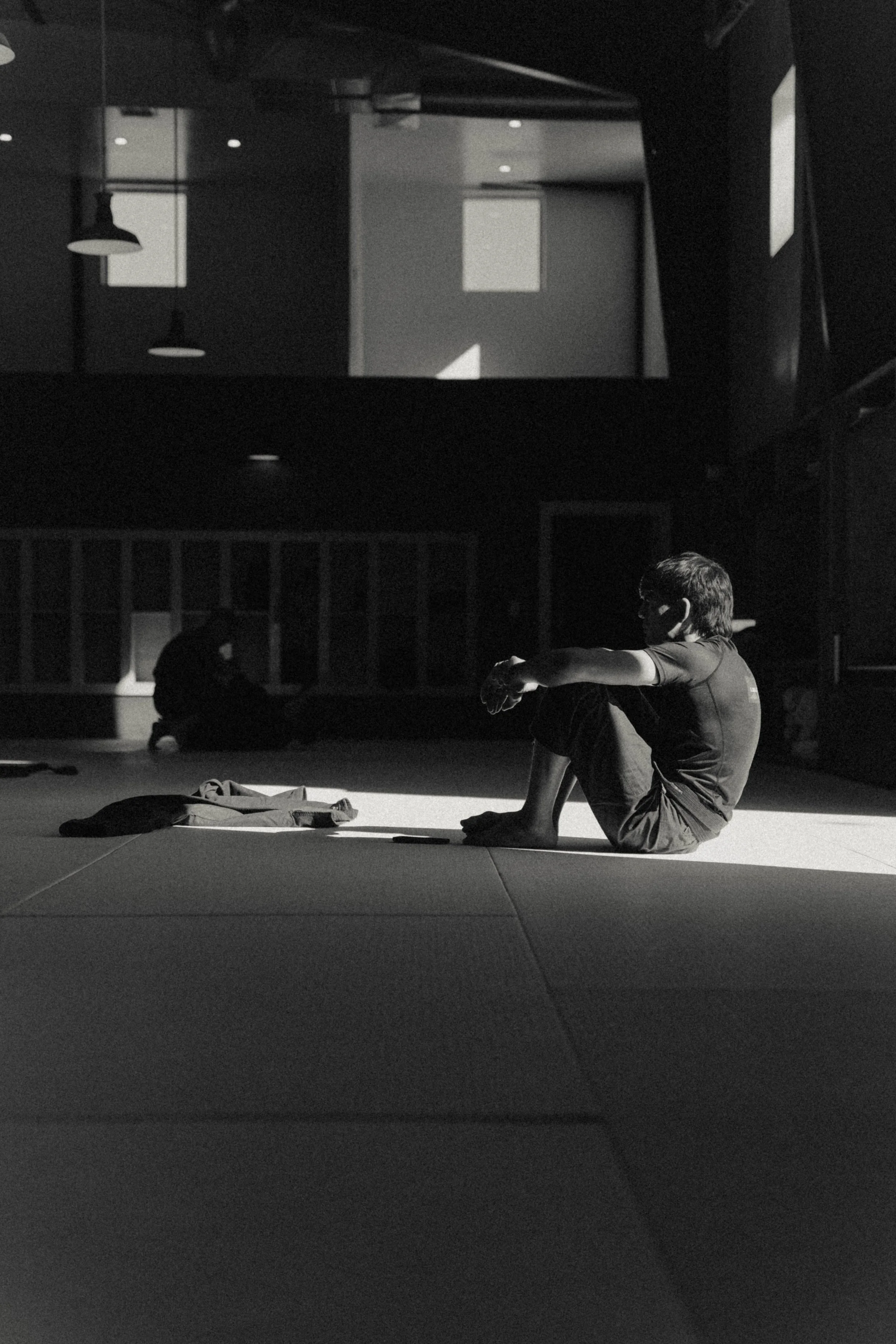
Yes, you can start Brazilian Jiu Jitsu at 30, 40, or later in life. You don't need previous martial arts experience, exceptional flexibility, or an athletic background to begin learning the fundamentals.
Many adults discover Jiu Jitsu after spending years focused on work, family, or other responsibilities.
The question isn't whether you've started too late. It's how to approach a new physical and technical practice in a way that works for your body, experience, and schedule.
Am I Too Old to Start Brazilian Jiu Jitsu?
There is no universal age at which someone becomes too old to begin learning Brazilian Jiu Jitsu.
However, age, medical history, existing injuries, and general fitness can influence how someone should approach training.
A 40-year-old beginner may need a different recovery routine or training frequency than a 20-year-old athlete. That doesn't mean the older student can't develop meaningful technical ability.
Jiu Jitsu is built around principles such as positioning, leverage, balance, and timing.
Although strength, speed, and athleticism play a role, technical understanding becomes increasingly important as students develop.
You don't need to arrive with those skills. That's what training is for.
Do You Need to Be in Shape Before Starting Jiu Jitsu?
No. You can begin learning Jiu Jitsu without already being in peak physical condition.
The movements involved in grappling are different from those found in running, weightlifting, or traditional fitness classes.
Even physically active beginners may find their first sessions surprisingly challenging.
This happens partly because Jiu Jitsu requires unfamiliar movement patterns, muscular engagement, and decision-making while under physical pressure.
Rather than trying to achieve a specific fitness level before attending, focus on finding a beginner-appropriate class where you can learn safely and progressively.
You can also support your training through walking, general strength work, mobility exercises, and adequate recovery.
If you have a medical condition or injury that could affect participation, consult an appropriate healthcare professional and communicate any limitations to your instructor.
How Often Should Beginners Train Jiu Jitsu?
For many adult beginners, two or three classes per week can be a reasonable starting point.
This provides opportunities to practice consistently while allowing time to recover and adjust.
However, there is no ideal schedule that applies to everyone.
Someone returning to exercise after several years might benefit from starting with one or two sessions weekly. A person with a substantial athletic background may tolerate more frequent training.
Consider your recovery, available time, and how you feel between classes.
The goal should be to develop a routine you can sustain, rather than training as frequently as possible during your first month.
Consistency over several months matters more than an exceptionally intense first week.
What Should You Expect During Your First Month?
Your first month of Brazilian Jiu Jitsu is primarily about becoming familiar with the practice.
You will likely encounter new terminology, unfamiliar body positions, and movements that don't immediately make sense.
That's normal.
Instead of trying to memorize every technique, focus on understanding a few foundational ideas.
Position Before Submission
Beginners often become interested in submissions such as armbars and chokes.
But developing positional awareness is essential.
Understanding where your body should be, how to maintain balance, and how to recognize a vulnerable position creates a foundation for more advanced techniques.
Learn to Be Comfortable With Uncertainty
In Jiu Jitsu, your training partner won't always respond the way you expect.
You may attempt a movement and discover that your opponent changes position before you finish.
Learning to respond to that uncertainty is part of the practice.
You don't have to win every exchange to make progress.
Ask Questions and Communicate
Good training relies on communication.
Tell your instructor if you're unfamiliar with a technique or need clarification. Inform training partners about injuries or limitations.
Learning when to tap, how to control your intensity, and how to work appropriately with different partners is especially important early on.
What If You're Nervous About Starting?
Beginning a new martial art can feel intimidating.
You may worry about being the least experienced person in the room, slowing down a partner, or not understanding the lesson.
But every experienced practitioner began as a beginner.
An introductory class is an opportunity to become familiar with the space, meet the instructors, and experience the culture of the academy.
You don't need to prove anything during your first session.
Pay attention, participate at an appropriate level, and be willing to learn.
Is Jiu Jitsu Good for Adults Who Don't Want to Compete?
Absolutely.
Competition is only one expression of Brazilian Jiu Jitsu.
Some students enjoy tournaments and structured performance goals. Others value the technical problem-solving, physical activity, and community that come with regular training.
Both approaches belong in the sport.
At Logos Jiu Jitsu, our community includes practitioners with different backgrounds, goals, and levels of experience.
You can take the practice seriously without having any interest in competing.
Starting Jiu Jitsu at Logos in Denver or Westminster
Logos Jiu Jitsu provides training opportunities for adult beginners at both our Denver and Westminster academies.
Founded by Michael Liera Jr., Logos is built around continuous improvement, technical instruction, and creating a space where students can develop through consistent practice.
Our beginner-focused instruction helps new students become familiar with the foundations of Jiu Jitsu. We also offer a White Belt Accelerator program designed to support the development of fundamental skills.
You don't need to arrive knowing how to grapple.
You need a willingness to learn, patience with yourself, and an interest in the process.
Your starting point doesn't determine how far you can go.