Gi vs. No-Gi Jiu Jitsu: What's the Difference and Which Should You Start With?
The primary difference between Gi and No-Gi Brazilian Jiu Jitsu is the uniform and how it influences grappling techniques. Gi training uses a traditional martial arts uniform that practitioners can grip, while No-Gi training uses athletic clothing and relies more heavily on controlling the body directly.
Both styles teach Brazilian Jiu Jitsu. Both develop technical understanding, positional control, and problem-solving skills.
For beginners, the better choice isn't necessarily one or the other. It's understanding how each style works and finding a practice you enjoy.
What Is Gi Jiu Jitsu?
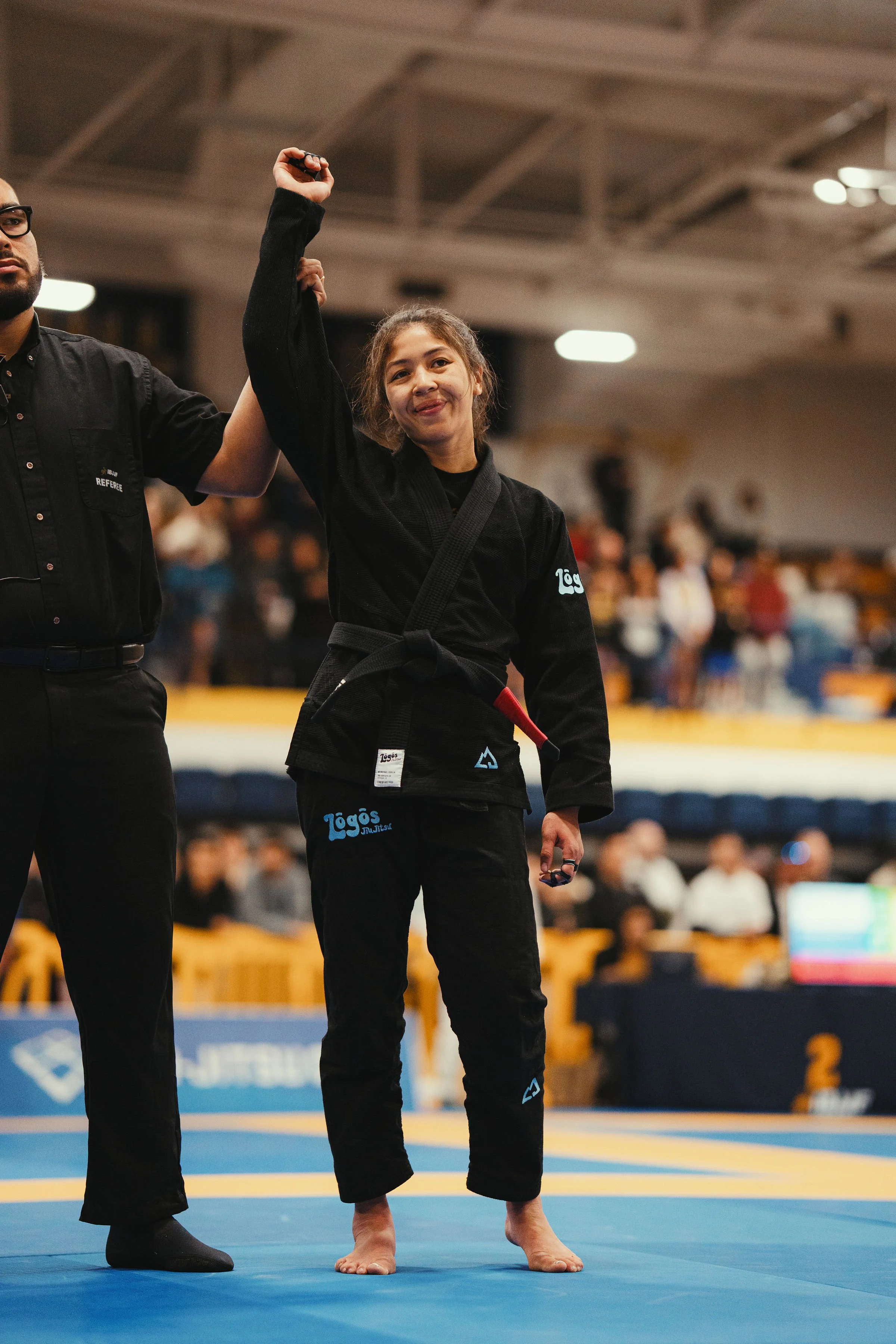
Gi Jiu Jitsu is practiced in a traditional uniform consisting of a jacket, pants, and belt.
The uniform is more than clothing. It's part of the technical environment.
Practitioners can establish grips on the collar, sleeves, pants, and lapels to control movement, create leverage, execute submissions, and manipulate their opponent's position.
These additional grips influence how positions develop.
For example, a student might use a sleeve grip to control an opponent's posture or a collar grip to establish a choking technique.
Because the fabric creates additional ways to slow or restrict movement, Gi training often involves extended grip exchanges and detailed positional battles.
Learning to manage those grips becomes an important part of developing technical proficiency.
What Is No-Gi Jiu Jitsu?
No-Gi Jiu Jitsu is practiced without the traditional uniform.
Instead, students typically wear a rashguard with grappling shorts or athletic leggings.
Without fabric grips, practitioners primarily control their opponents through body positioning, wrist control, underhooks, overhooks, head positioning, and other direct connections.
Sweat and the absence of a jacket can make certain grips harder to maintain, creating different opportunities for movement and escape.
No-Gi training frequently features dynamic exchanges, wrestling-based techniques, and transitions between positions.
However, No-Gi isn't automatically faster, just as Gi isn't always slower. The pace depends on the practitioners, their technical decisions, and the circumstances of the training round.
What Are the Main Differences Between Gi and No-Gi?
While both styles share the same fundamental principles, several differences influence how they're practiced.
Uniform and Gripping
In Gi Jiu Jitsu, practitioners can grip their opponent's jacket and pants. This creates additional opportunities to establish control, manipulate posture, and execute submissions.
In No-Gi, control depends more heavily on direct contact with the body, including wrist control, underhooks, overhooks, and head positioning.
Movement and Pacing
Gi training can involve slower, more methodical positional exchanges because fabric grips make certain forms of control easier to maintain.
No-Gi often involves faster transitions and more frequent positional changes because opponents can be more difficult to hold.
However, both styles require timing, precision, and technical awareness.
Techniques and Submissions
Many techniques work in both styles, including positional escapes, guard passes, armbars, and rear naked chokes.
Others depend on the uniform.
For example, collar chokes require jacket fabric, while certain No-Gi techniques rely on body positioning and gripping methods that don't involve clothing.
Both styles also have competition rulesets that may restrict specific techniques depending on the organization and athlete's division.
Is Gi or No-Gi Better for Beginners?
Neither style is universally better for beginners.
Gi training introduces additional gripping options that can help students control movement, but those same grips add technical complexity.
No-Gi removes many fabric-based controls, but students must learn how to maintain effective connections when opponents can move more freely.
In both cases, beginners will encounter unfamiliar movements, positions, and terminology.
The most important factors early on are quality instruction, consistency, and developing comfort with the foundational positions of Jiu Jitsu.
At Logos Jiu Jitsu, we encourage students to approach the practice with curiosity rather than feeling pressured to specialize immediately.
Trying both Gi and No-Gi can help you discover what you enjoy and how the two styles complement each other.
Will Training Gi Make You Better at No-Gi?
Training in both styles can help develop a broader understanding of grappling.
Many foundational principles transfer directly.
Maintaining balance, controlling distance, escaping inferior positions, and understanding how to use leverage are essential regardless of uniform.
However, not every technique transfers unchanged.
A collar choke that depends on jacket fabric cannot be performed the same way in No-Gi. Similarly, some No-Gi control sequences require adjustments when an opponent can establish grips on your uniform.
Learning to recognize these differences helps students develop adaptable technical skills.
The goal isn't to make both styles identical. It's to understand the opportunities and limitations of each.
What Should You Wear to Gi and No-Gi Classes at Logos?
Logos Jiu Jitsu has specific uniform standards to help maintain a consistent training environment.
Gi classes: Black, white, and blue Gis are permitted.
No-Gi classes: Students wear a black rashguard with black grappling shorts or leggings. Shorts should not have exposed zippers or other potentially hazardous hardware.
Uniforms should always be clean and suitable for grappling.
If you're attending your first class and don't have equipment yet, contact the academy before purchasing a uniform so our team can help you prepare.
Where Can You Train Gi and No-Gi in Denver?
Logos Jiu Jitsu offers Gi and No-Gi training opportunities through our Denver HQ and Westminster programs.
Our Denver headquarters, founded by third-degree black belt Michael Liera Jr., provides a structured environment for beginners and experienced practitioners to develop their technical understanding.
Westminster, led by Professor Elizabeth Liera, also offers adult training, with Gi and No-Gi instruction.
Class formats vary throughout the week, so check the current schedule before attending.
Start With the Practice, Not the Preference
When you're new to Brazilian Jiu Jitsu, it's easy to become focused on choosing the right style, finding the perfect gear, or learning every technical difference before you begin.
You don't need to have everything figured out.
Start by learning how to move, how to protect yourself during training, how to work with a partner, and how to become comfortable with the process.
Over time, your preferences and understanding will develop naturally.
Gi or No-Gi, the objective remains the same: keep learning.
Explore our class schedule or request a free trial at Logos Jiu Jitsu.